
 Product & Series Guides Sep 24, 2026 HM212049/HM212011 Bearing for Heavy Truck: Wholesale Supplier Verify HM212049/HM212011 bearing specs to prevent heavy truck axle failures and port seizures. Ensure precise inner and outer ring matching alongside flawless customs documentation… Read the Article
Product details
Bearing Description and Use
The notes below help repair managers, engineers and technical buyers match this bearing to the correct position and arrangement.
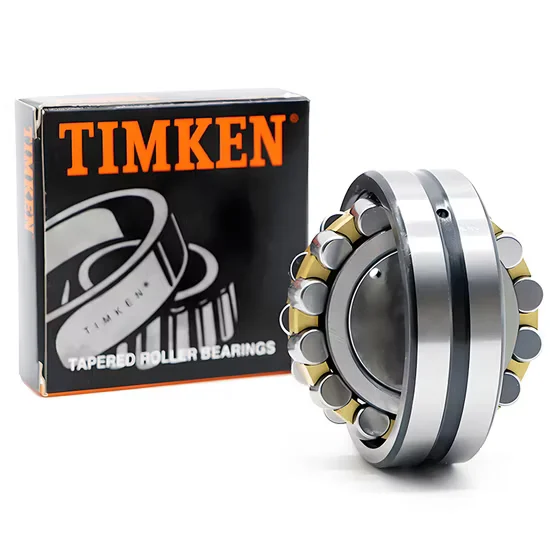
Cross-Reference Alignment — verifying clearance, cage design, and taper angle ensures the Timken 23030CAK performs identically to its OEM counterpart.
Technical Specifications
| Parameter | Value |
|---|---|
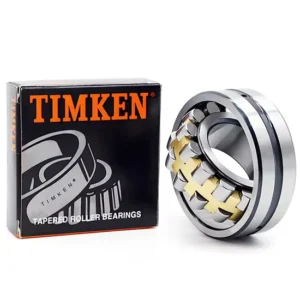
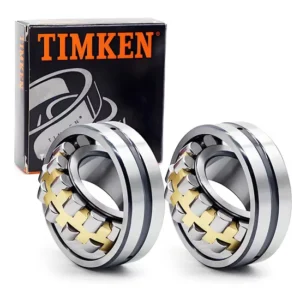
| Designation | Timken 23030CAK |
| Bearing Type | Spherical Roller Bearing |
| Bore Diameter (d) | 150 mm |
| Outside Diameter (D) | 225 mm |
| Width (B) | 56 mm |
| Bore Type | Tapered (1:12) |
| Number of Rows | Double |
| Material | Bearing Steel |
| Load Direction | Radial |
| Lubrication | Grease or Oil |
| Origin | America |
Application Suitability
| Industry | Typical Applications |
|---|---|
| Mining & Construction | Vibrating screens and crusher main shafts |
| Metallurgy | Steel mill continuous casting equipment |
| Pulp & Paper | Paper machine dryer cylinders |
Why Tapered Bores Fail in Heavy-Duty Spherical Roller Bearings
Improper heating methods during mounting destroy the bearing steel microstructure before the machine even starts.
I once watched maintenance crews use open flames to heat a similar spherical roller bearing for a continuous caster, causing localized annealing that led to catastrophic seizure within weeks. When sourcing a Timken 23030CAK spherical roller bearing, avoiding such field improvisations is just as critical as the component's inherent metallurgy. Misalignment and thermal distortion during installation negate the engineered radial capacity, turning premium steel into scrap metal.
Matching the Timken 23030CAK to Severe Misalignment
This Timken 23030CAK spherical roller bearing accommodates shaft deflections typical in vibrating screens and crusher assemblies. The outer ring's spherical raceway allows the inner ring and roller assembly to pivot, neutralizing edge stresses that destroy rigid bearings. Our engineering team cross-checks the specific cage design against the vibration frequency of your equipment to ensure the rollers maintain proper guidance under severe radial loads.
Managing Load Shocks and Contamination in Mining
Heavy machinery operates under combined radial and moderate axial loads, punctuated by severe impact shocks from crushing raw materials. Dust and slurry ingress threaten the rolling elements, making the choice between grease and oil lubrication critical for flushing out contaminants. Without adequate sealing solutions or proper re-lubrication intervals, abrasive particles embed in the raceways, accelerating surface fatigue and spalling.
Decoding the 1:12 Taper and Internal Geometry
The K suffix indicates a 1:12 tapered bore, designed to mate precisely with adapter or withdrawal sleeves for secure shaft locking and residual clearance adjustment. This specific taper ratio allows for fine-tuned radial internal clearance reduction during mounting, which is vital for heavy radial loads. Proper sleeve selection ensures the inner ring expands evenly without inducing hoop stress fractures. The internal geometry is optimized to distribute radial forces across the double-row rolling elements, maximizing the load-bearing cross-section under severe deflection.
The Hidden Costs of Field-Improvised Mounting
Relying on uncontrolled heating or mechanical brute force during installation leads to unplanned downtime and premature failure of the entire drive assembly. When the microstructure of the bearing steel is compromised by localized overheating, the component loses its fatigue strength, resulting in catastrophic damage to the shaft and housing. Adhering to controlled induction heating and precise drive-up measurements prevents warranty voidance and extends the operational lifecycle.
Sourcing Authenticity and Technical Verification
We supply genuine components with complete traceability, ensuring the Timken 23030CAK spherical roller bearing you receive matches the OEM metallurgical standards. Buyers frequently encounter mismatched internal clearances when substituting taper bore bearings; we verify the exact sleeve compatibility and residual clearance targets for your specific shaft dimensions. Our inventory covers thousands of standard part numbers, allowing us to consolidate mixed-brand project orders while providing technical selection support to prevent field assembly errors.
Documentation & Authenticity
- Certificate of Conformity tracing the specific production batch of the Timken 23030CAK.
- Official app QR verification to confirm the origin and authenticity of the packaging.
- Material inspection reports validating the bearing steel grade and heat treatment.
- Dimensional inspection reports confirming the 1:12 taper angle and 150 mm bore tolerance.
Storage, Handling & Mounting
- Store the 150 mm bore tapered components in original packaging to prevent humidity-induced corrosion on the exposed steel surfaces.
- Use controlled induction heating for mounting the tapered bore onto adapter sleeves, strictly avoiding open flames that anneal the steel.
- Measure the drive-up distance and residual radial clearance during installation to ensure the double-row rollers are properly preloaded.
- Apply clean gloves when handling the unseparated roller assembly to prevent sweat-induced micro-corrosion on the precision-ground raceways.
- Verify the compatibility of the selected withdrawal or adapter sleeve with the 1:12 taper before pressing the inner ring.
Engineering Inquiry and Technical Review
To ensure optimal performance, please provide your equipment's radial and axial load profiles, operating speeds, and ambient temperature ranges. Sharing the specific OEM equipment model number allows our team to perform a precise cross-reference check and verify the required adapter sleeve dimensions. We will evaluate your installation space and maintenance conditions to confirm the appropriate internal clearance and lubrication strategy for your application.
Frequently Asked Questions
Q: How do I verify the authenticity and origin of the Timken 23030CAK?
A: We provide complete traceability documentation, including a Certificate of Conformity linked to the specific production batch. Buyers can also use the manufacturer's official app to scan the QR code on the packaging, instantly verifying the origin and ensuring the component is a genuine product rather than a counterfeit substitute.
Q: What is the correct mounting procedure for the 1:12 tapered bore?
A: Mounting requires an appropriate adapter or withdrawal sleeve and controlled induction heating. You must measure the drive-up distance and check the reduction in radial internal clearance to ensure a secure fit on the shaft. Never use open flames for heating, as uneven thermal expansion will anneal the steel and cause premature seizure.
Q: How does the CA suffix affect the internal design of this bearing?
A: The CA suffix generally relates to the specific cage design and internal geometry, but it is currently an unverified suffix requiring manufacturer catalog confirmation. We recommend consulting the official technical documentation or our engineering team to confirm the exact cage material and roller guidance mechanism before finalizing your procurement.
Q: Which internal clearance class is best for vibrating screen applications?
A: Vibrating screens generate significant heat and operate under heavy radial loads, typically requiring a larger internal clearance class like C3 or C4 to accommodate thermal expansion. Providing your specific operating temperature and vibration frequency allows us to calculate the exact residual clearance needed to prevent the rollers from skidding or binding.
Same product family
Related Timken Bearings
These bearings share a category with this model, which makes it easier to build a complete repair list.
 Cylindrical Roller Bearings NJ220EM NJ221EM NJ222EM Cylindrical Roller Bearing Timken NACHI NSK View Details
 Cylindrical Roller Bearings Genuine Timken NJ309EM NJ310EM NJ311EM Cylindrical Roller Bearing Wholesale Supply View Details
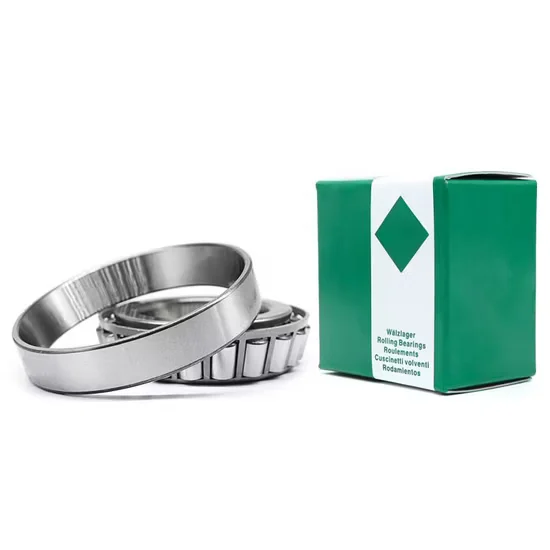 Motorcycle and Bicycle Bearings Genuine TIMKEN 30205 32006X Taper Roller Bearing for Motorcycle Parts HK2016 Axk2035 View Details
 Paper Machine Bearings Genuine TIMKEN 32304 Tapered Roller Bearing for Paper Mills Machine View Details
Where it runs
Applications
This bearing is linked to the repair and equipment settings below. Open each one to see the related product categories and models.
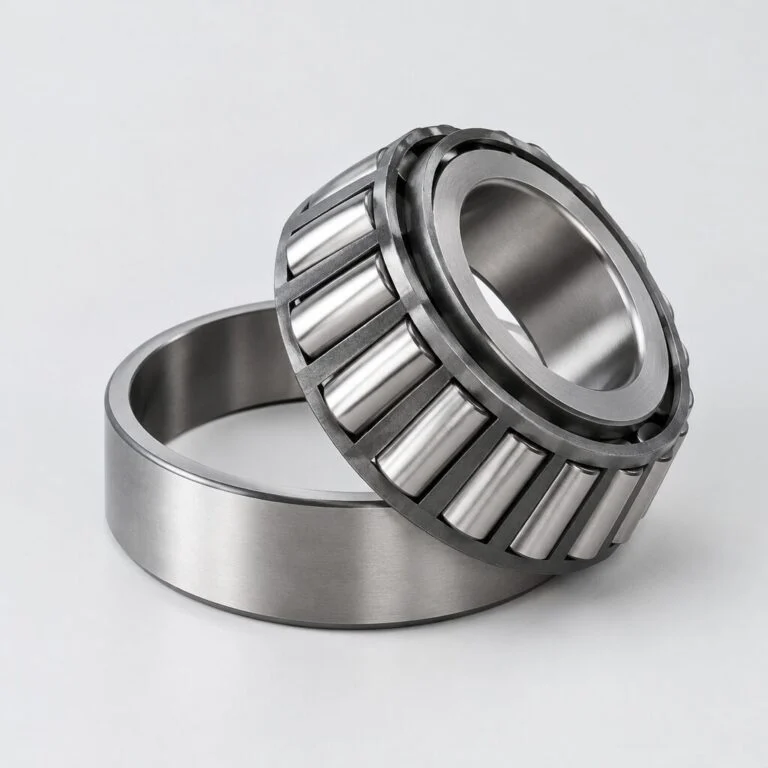 Heavy Equipment Repair Heavy equipment repair covers bearing positions in final drives, axles, swing assemblies and drivetrain components that run under high radial and axial loads. Shock… Bearings by Industry · Roller Bearings · Tapered Roller Bearings · Inch Size Bearings View Application
 Industrial Power Transmission Industrial drive lines rely on bearings in shaft supports, gear drives and rotating process equipment such as rolling mills, paper machines and wind turbine… Spherical Roller Bearings · Thrust Ball Bearings · Rolling Mill Bearings · Paper Machine Bearings View Application
One list for inch and metric Timken bearings
Rebuilding a differential, wheel end, gearbox or transmission? Request single replacements or a complete assembly list, and compare the set price with itemized prices.
Send Your Assembly ListTechnical articles
Selection and Identification Guides
These articles support bearing selection and identification for this product type.
Product & Series Guides Sep 24, 2026 HM212049/HM212011 Bearing for Heavy Truck: Wholesale Supplier Verify HM212049/HM212011 bearing specs to prevent heavy truck axle failures and port seizures. Ensure precise inner and outer ring matching alongside flawless customs documentation… Read the Article  Applications & Industries Sep 23, 2026 Tapered Roller Bearings for Lumber Mill Equipment Wholesale Supplier Selecting the right Tapered Bearings in Lumber Mill Equipment requires C3 or C4 internal clearance to prevent thermal seizure during high-speed operations. Combine this… Read the Article
 Buying Guide Sep 23, 2026 Timken Bearings for Lawn and Garden Equipment Wholesale Supplier Prevent costly spindle failures by selecting genuine Timken bearings for lawn and garden equipment that match specific load conditions. Verify authenticity through traceability documentation… Read the Article
Buyer questions
Frequently Asked Questions
Transmission Repairs Company supplies Timken bearings to repair shops, distributors and equipment operators worldwide. These answers cover the points buyers check most often.
Do I need to provide both cone and cup numbers?
Yes, provide both numbers wherever the bearing has a separate cone and cup. Listing each component keeps the cup from being missed on the order. If a number is incomplete, send a clear photo of the markings and state what needs confirming.
Can a substitute be supplied without my approval?
No, any technical change requires buyer approval. A substitute is considered only if it is separately identified. The exact specification and complete assembly are confirmed before you accept the quote.
Which product documents can I request?
Name the product documents you need when you request a quote. The documents for your bearing are confirmed at that stage, alongside the part numbers, quantities and estimated lead time.
How are shipping documents handled?
Shipping documents are confirmed for each order, together with the transport method and dispatch arrangements. Include your destination country and postal code in the request. This also lets you compare total landed cost on bulk orders.
Written quote
Request a Quote for This Bearing
Send your cone and cup numbers or full assembly number, and get a written quote with price, availability, estimated lead time and quote validity.
-
WhatsApp
Chat About This Bearing -
Email
info@usatimken.com