


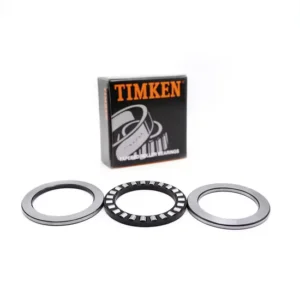


 Product & Series Guides Sep 24, 2026 HM212049/HM212011 Bearing for Heavy Truck: Wholesale Supplier Verify HM212049/HM212011 bearing specs to prevent heavy truck axle failures and port seizures. Ensure precise inner and outer ring matching alongside flawless customs documentation… Read the Article
Product details
Bearing Description and Use
The notes below help repair managers, engineers and technical buyers match this bearing to the correct position and arrangement.
Traceable Batch Origins — Every 52205 unit ships with verifiable production lot documentation to ensure metallurgical consistency across shipments.
Technical Specifications
| Parameter | Value |
|---|---|
| Designation | 52205 |
| Bearing Type | Thrust Ball Bearing |
| Lubrication | Grease or Oil |
| Precision Class | P0, P6, P5, P4, P2 |
| Vibration Level | Z1V1, Z2V2, Z3V3 |
| Material | Bearing Steel |
| Contact Angle | 0° |
| Aligning | Non-Aligning |
| Separated | Separated |
| Load Direction | Thrust |
| Origin | China |
| Certification | ISO9001:2008 |
| Customization | Available |
Application Suitability
| Industry | Typical Applications |
|---|---|
| Automobile | Transmission thrust mechanisms, steering column axial supports |
| Rolling Mill | Roll neck axial positioning, guide roller thrust loads |
| Metallurgy | Continuous casting machine oscillating frames, heavy press axial guides |
| Mine | Conveyor drive shaft axial retention, crusher thrust plates |
Why Standard Thrust Bearings Fail in High-Heat Metallurgy
Thermal distortion of inadequate cage materials remains the primary culprit for axial seizure in heavy industry.
During my field inspections in Riyadh, I witnessed a cement plant's production line halt completely because a standard stamped steel cage in a similar thrust bearing deformed under extreme heat, causing immediate seizure. When sourcing a BDL 52205 thrust ball bearing for demanding metallurgy or rolling mill environments, overlooking the internal component quality leads to catastrophic friction. The absence of specific cage or clearance suffixes on a standard part number means buyers must actively verify the internal construction rather than assuming it suits high-temperature axial loads.
Matching the BDL 52205 Thrust Ball Bearing to Axial Load Demands
Selecting the correct axial component requires more than just matching the bore and outer diameter. Our engineering team provides cross-brand equivalent model consultation to ensure the BDL 52205 thrust ball bearing aligns perfectly with your specific load profiles. We evaluate the axial force vectors and operating speeds to confirm that the standard separated design meets your equipment's dynamic requirements without premature wear.
Managing Thermal Expansion and Lubrication Breakdown
Thrust bearings operate under intense axial compression, generating significant internal friction heat. If the lubrication film breaks down due to thermal degradation, metal-to-metal contact accelerates wear drastically. Choosing between grease or oil lubrication depends heavily on the operating temperature and the ability to flush out contaminants in dusty mining or metallurgy settings. Proper clearance selection is equally critical, as thermal expansion can eliminate internal gaps, leading to excessive preload and eventual cage failure.
Decoding Precision and Vibration Tolerances
The available precision classes from P0 to P2 dictate the running accuracy and dimensional tolerances of the BDL 52205 thrust ball bearing. Higher precision grades like P4 or P2 are essential for machine tool spindles or high-speed automotive transmissions where axial runout causes vibration. The vibration ratings, ranging from Z1V1 to Z3V3, indicate the strictness of the manufacturing process in minimizing surface waviness and noise. Since the 52205 features a separated design, the shaft washer, housing washer, and ball-cage assembly can be mounted independently, simplifying installation in tight spaces. The bearing steel construction provides the necessary core hardness to withstand heavy static thrust loads, though the exact cage material must be verified for high-heat applications.
The Hidden Downtime Cost of Ignoring Cage and Clearance Specs
Specifying a standard open-type bearing without verifying its internal geometry often results in unplanned downtime. When a thrust bearing fails prematurely due to inadequate clearance or unsuitable cage materials, the resulting shaft misalignment can cause catastrophic damage to adjacent gears and seals. According to failure analysis frameworks, a significant share of premature failures stems from application mismatches rather than manufacturing defects. Replacing a seized thrust component in a continuous casting machine halts the entire production line, voiding delivery schedules and inflating maintenance costs far beyond the part's initial price.
Securing Reliable Axial Components Through Strict Verification
Sourcing standard designation bearings often leads to mismatched internal components if the supplier relies solely on basic part numbers. We maintain massive spot inventory covering thousands of standard part numbers, allowing us to consolidate mixed-brand orders efficiently. When procuring the BDL 52205 thrust ball bearing, our technical selection support ensures you receive the correct cage type and clearance, avoiding the common trap of receiving standard stamped cages for high-heat environments. Our ISO-compliant quality assurance includes rigorous dimensional checks before dispatch. Furthermore, our competitive sourcing cost compared to direct official channels provides excellent value for bulk project orders without sacrificing traceability.
Documentation & Authenticity
- Certificate of Conformity confirming ISO9001:2008 compliance for the supplied batch.
- Original manufacturer batch traceability codes linked to the specific 52205 production run.
- Material inspection reports verifying bearing steel metallurgical composition.
- Dimensional and running accuracy inspection reports confirming the selected P-class tolerances.
- Origin documentation detailing the manufacturing facility for customs clearance.
Storage, Handling & Mounting
- Keep the separated shaft and housing washers in original packaging to prevent corrosion before mounting.
- Use clean gloves when handling the ball-cage assembly to avoid contaminating the bearing steel surfaces.
- Apply the specified grease or oil immediately after unsealing to protect the open-type raceways.
- Ensure the shaft washer fits tightly while the housing washer remains loose to accommodate misalignment.
- Verify the non-aligning design requires perfectly square mounting surfaces to prevent uneven axial loading.
Engineering Data Required for Final Selection
To guarantee optimal performance, please share your specific axial load values, operating speeds, and ambient temperature ranges. Providing the OEM equipment model number allows our engineers to perform precise cross-reference verification and confirm the correct internal clearance. Detailing the environmental exposure, such as dust or moisture levels, helps us recommend the most suitable lubrication and sealing arrangements for your application.
Frequently Asked Questions
Q: How do I choose the right precision class for this thrust bearing?
A: Standard P0 or P6 classes are generally sufficient for heavy machinery like rolling mills or conveyors where extreme rotational accuracy is not critical. However, if the bearing supports high-speed automotive transmissions or precision machine tools, upgrading to P4 or P2 ensures minimal axial runout and reduced vibration. We recommend consulting our technical team to balance performance needs with procurement budgets.
Q: Which lubrication method is better for thrust applications in rolling mills?
A: Oil lubrication is typically preferred in rolling mills because it effectively dissipates the intense heat generated by heavy axial loads and high friction. It also allows for continuous filtration to remove metallic wear particles. Grease is suitable for lower-speed or sealed environments where maintenance access is limited, but it requires careful monitoring to prevent thermal degradation and subsequent cage failure.
Q: How can I verify the row arrangement for the 52xxx series?
A: The 52xxx series typically indicates a double direction thrust ball bearing, capable of handling axial loads in both directions. However, standard catalog designations can sometimes vary by manufacturer. We strongly advise verifying the exact physical configuration and number of rows against the official manufacturer documentation or requesting a dimensional drawing from our engineering team before finalizing your purchase order.
Q: What are common failure modes in metallurgy applications?
A: In metallurgy, excessive heat and heavy axial shocks frequently cause lubrication breakdown and cage deformation. Standard stamped steel cages may distort under thermal stress, leading to ball skewing and eventual seizure. Selecting the appropriate internal clearance and verifying the cage material specification are critical steps to prevent these premature failures and ensure continuous operation in harsh environments.
Same product family
Related Timken Bearings
These bearings share a category with this model, which makes it easier to build a complete repair list.
 Tapered Roller Bearings TIMKEN 32303 Tapered Roller Bearing Genuine Wholesale Supplier View Details
 Deep Groove Ball Bearings NTN NSK Koyo Timken NACHI 6256 6276 Deep Groove Ball Bearing View Details
 Deep Groove Ball Bearings Genuine NTN 61917 61917-Z 61917-2Z Deep Groove Ball Bearing Low Noise Wholesale View Details
 Paper Machine Bearings Genuine TIMKEN 32304 Tapered Roller Bearing for Paper Mills Machine View Details
Where it runs
Applications
This bearing is linked to the repair and equipment settings below. Open each one to see the related product categories and models.
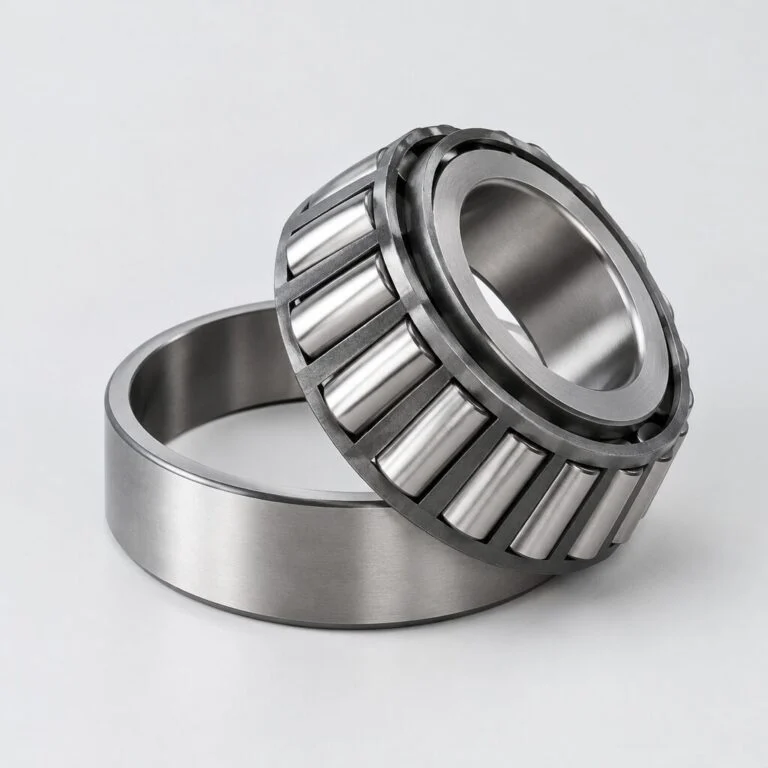 Heavy Equipment Repair Heavy equipment repair covers bearing positions in final drives, axles, swing assemblies and drivetrain components that run under high radial and axial loads. Shock… Bearings by Industry · Roller Bearings · Tapered Roller Bearings · Inch Size Bearings View Application
 Industrial Power Transmission Industrial drive lines rely on bearings in shaft supports, gear drives and rotating process equipment such as rolling mills, paper machines and wind turbine… Spherical Roller Bearings · Thrust Ball Bearings · Rolling Mill Bearings · Paper Machine Bearings View Application
One list for inch and metric Timken bearings
Rebuilding a differential, wheel end, gearbox or transmission? Request single replacements or a complete assembly list, and compare the set price with itemized prices.
Send Your Assembly ListTechnical articles
Selection and Identification Guides
These articles support bearing selection and identification for this product type.
Product & Series Guides Sep 24, 2026 HM212049/HM212011 Bearing for Heavy Truck: Wholesale Supplier Verify HM212049/HM212011 bearing specs to prevent heavy truck axle failures and port seizures. Ensure precise inner and outer ring matching alongside flawless customs documentation… Read the Article  Applications & Industries Sep 23, 2026 Tapered Roller Bearings for Lumber Mill Equipment Wholesale Supplier Selecting the right Tapered Bearings in Lumber Mill Equipment requires C3 or C4 internal clearance to prevent thermal seizure during high-speed operations. Combine this… Read the Article
 Buying Guide Sep 23, 2026 Timken Bearings for Lawn and Garden Equipment Wholesale Supplier Prevent costly spindle failures by selecting genuine Timken bearings for lawn and garden equipment that match specific load conditions. Verify authenticity through traceability documentation… Read the Article
Buyer questions
Frequently Asked Questions
Transmission Repairs Company supplies Timken bearings to repair shops, distributors and equipment operators worldwide. These answers cover the points buyers check most often.
Do I need to provide both cone and cup numbers?
Yes, provide both numbers wherever the bearing has a separate cone and cup. Listing each component keeps the cup from being missed on the order. If a number is incomplete, send a clear photo of the markings and state what needs confirming.
Can a substitute be supplied without my approval?
No, any technical change requires buyer approval. A substitute is considered only if it is separately identified. The exact specification and complete assembly are confirmed before you accept the quote.
Which product documents can I request?
Name the product documents you need when you request a quote. The documents for your bearing are confirmed at that stage, alongside the part numbers, quantities and estimated lead time.
How are shipping documents handled?
Shipping documents are confirmed for each order, together with the transport method and dispatch arrangements. Include your destination country and postal code in the request. This also lets you compare total landed cost on bulk orders.
Written quote
Request a Quote for This Bearing
Send your cone and cup numbers or full assembly number, and get a written quote with price, availability, estimated lead time and quote validity.
-
WhatsApp
Chat About This Bearing -
Email
info@usatimken.com