


 Product & Series Guides Sep 24, 2026 HM212049/HM212011 Bearing for Heavy Truck: Wholesale Supplier Verify HM212049/HM212011 bearing specs to prevent heavy truck axle failures and port seizures. Ensure precise inner and outer ring matching alongside flawless customs documentation… Read the Article
Product details
Bearing Description and Use
The notes below help repair managers, engineers and technical buyers match this bearing to the correct position and arrangement.
Verify via official app — Scan the QR code on the TIMKEN 7008 packaging to confirm authentic origin and traceability before spindle assembly.
Technical Specifications
| Parameter | Value |
|---|---|
| Designation | TIMKEN 7008 |
| Bearing Type | Angular Contact Ball Bearing |
| Bore Diameter (d) | 40 mm |
| Outside Diameter (D) | 68 mm |
| Width (B) | 14 mm |
| Number of Rows | Single |
| Material | Bearing Steel |
| Lubrication | Grease or Oil |
| Seal or Shield Type | Open |
| Origin | America |
Application Suitability
| Industry | Typical Applications |
|---|---|
| Machine Tool Manufacturing | High-speed spindle assemblies requiring precise radial and axial load support |
| Precision Equipment | Robotics joints and high-speed pump shafts demanding rigid rotational accuracy |
Why Spindle Vibration Ruins Machining Accuracy with a TIMKEN 7008 angular contact ball bearing
Undetected suffix mismatches and improper preload setups destroy rotational stability long before the steel fatigues.
Years ago in Vietnam, I sourced spindle bearings for a client but overlooked the exact suffix codes, leading to severe vibration and a complete production line shutdown. That costly mistake proved that assuming basic dimensions are enough will compromise the entire machining center. The absence of explicit suffixes on a base designation often masks critical variations in internal geometry and tolerance grades. Proper verification of precision classes and contact angles is mandatory to avoid catastrophic downtime and ensure the spindle maintains its tight machining tolerances under continuous heavy cutting loads.
Matching the TIMKEN 7008 angular contact ball bearing to High-Speed Spindle Demands
When outfitting precision spindles, the open-type design of this TIMKEN 7008 angular contact ball bearing allows for customized oil-air or grease lubrication strategies configured for specific RPM thresholds. Our engineering team provides cross-brand equivalent model consultation to ensure the selected single-row configuration aligns perfectly with your machine tool's axial thrust requirements. This flexibility prevents premature wear in high-speed cutting environments where thermal management is just as critical as load capacity. By carefully evaluating the specific operational demands of your precision equipment, we ensure the bearing's internal geometry supports the rigorous rotational accuracy required for flawless surface finishes.
Managing Thermal Expansion and Lubrication in Precision Spindles
High-speed spindles generate intense frictional heat, which directly impacts internal clearance and lubricant film thickness. An open seal configuration eliminates contact friction, allowing heat to dissipate efficiently while requiring a rigorous external oil-mist or grease purge system to prevent microscopic contamination. Combined radial and axial cutting forces demand exceptional rigidity, making the correct preload arrangement absolutely critical for maintaining dimensional stability under heavy, interrupted loads. Without adequate thermal management and precise lubrication delivery, the bearing steel can lose its structural integrity, leading to micro-pitting and accelerated raceway degradation.
Decoding the Absence of Suffixes on the Base Designation
The base designation without additional suffixes indicates a standard configuration, but high-performance spindle applications strictly require verified contact angles and precision classes. In angular contact designs, the contact angle dictates the axial load capacity; assuming a default angle without checking manufacturer documentation can lead to rapid failure under heavy thrust loads. Furthermore, standard clearance might not accommodate the thermal expansion typical in high-speed machining, necessitating a careful review of the specific precision grade and internal geometry before installation. Buyers must cross-check the exact cage material and precision tolerance to ensure it meets the rigorous demands of machine tool spindles. Relying solely on the base number without confirming these hidden parameters is a frequent sourcing trap that compromises the entire assembly.
The Hidden Toll of Overlooking Precision and Clearance Specs
Installing a bearing with incorrect internal clearance or unverified precision grades leads to excessive heat generation and accelerated raceway wear. This unplanned downtime not only halts production but can cause catastrophic damage to the spindle shaft, housing, and adjacent seals. According to industry failure analysis frameworks, improper selection, inadequate lubrication, and mounting errors account for a significant share of premature bearing failures. Ultimately, the financial impact of replacing a damaged high-precision spindle far exceeds the initial investment in properly specified and verified components.
Securing Authentic Spindle Components Through Rigorous Verification
Sourcing genuine TIMKEN components requires strict channel authorization to guarantee complete traceability directly from the manufacturer's production facilities. We provide original manufacturer batch documentation and QR code verification specifically for high-precision spindle bearings, eliminating the risk of counterfeit parts entering your maintenance inventory. Our massive spot inventory covers thousands of standard and special part numbers, ensuring rapid fulfillment for urgent machine tool repair requirements without enduring typical multi-week lead times. Additionally, our technical team offers cross-reference alignment and failure analysis support to help you select the exact precision class and cage material needed for your specific spindle arrangement.
Documentation & Authenticity
- Certificate of Conformity confirming the specific precision class required for machine tool spindles.
- Original manufacturer batch traceability documentation linked to the TIMKEN 7008 production run.
- Official app QR code verification to authenticate the open-type bearing before installation.
- Dimensional inspection report validating the 40x68x14 mm tolerances against spindle housing specs.
- Material certification verifying the bearing steel composition for high-speed rotational stability.
Storage, Handling & Mounting
- Keep the open-type bearing in its original moisture-controlled packaging until the exact moment of spindle assembly.
- Use clean lint-free gloves when handling the 40 mm bore to prevent skin oils from corroding the bearing steel.
- Apply induction heating strictly controlled below the thermal limit of standard bearing steel during cylindrical bore mounting.
- Ensure the external grease or oil lubrication system is fully purged before testing the single-row configuration.
- Verify the matching marks and preload arrangement if installing multiple units in a tandem or back-to-back spindle setup.
Providing the Right Data for Spindle Bearing Verification
To ensure optimal L10 life and rotational accuracy, please share your spindle's exact radial and axial loads, maximum RPM, and operating temperature range. Providing the original equipment manufacturer part number allows our engineering team to perform a precise cross-reference check for the required precision class, contact angle, and preload specifications. Supplying these detailed operational parameters guarantees that the selected configuration perfectly matches your machine tool's rigorous demands, preventing costly trial-and-error installations and ensuring long-term reliability.
Frequently Asked Questions
Q: How can I verify the authenticity of the TIMKEN 7008 angular contact ball bearing before installation?
A: You can authenticate the bearing by scanning the QR code on the packaging using the manufacturer's official mobile application. This digital verification confirms the original production batch and ensures the component meets the strict traceability requirements necessary for precision machine tool spindles.
Q: What cross-reference considerations are critical when replacing standard spindle bearings?
A: When replacing spindle bearings, you must align the precision class, internal clearance, and cage material with the original equipment specifications. Even if the basic 40x68x14 mm dimensions match, overlooking these hidden parameters can cause severe vibration and compromise the machining accuracy of the entire spindle assembly.
Q: How do I choose between grease and oil lubrication for this open-type angular contact bearing?
A: The choice depends on your spindle's maximum speed and cooling requirements. Oil-air or oil-mist lubrication is typically preferred for high-speed applications to minimize frictional heat, while high-speed grease suits moderately paced spindles where external sealing prevents contamination ingress into the open bearing design.
Q: What are the matching and preload guidelines for single row angular contact bearings in spindles?
A: Single row angular contact bearings are rarely used alone in spindles; they are typically arranged in back-to-back, face-to-face, or tandem configurations to handle bidirectional axial loads. Proper preload selection is essential to maintain rigidity under cutting forces while preventing excessive heat generation that could degrade the bearing steel.
Same product family
Related Timken Bearings
These bearings share a category with this model, which makes it easier to build a complete repair list.
 Cylindrical Roller Bearings Genuine NSK NJ214EM NJ215EM NJ216EM Cylindrical Roller Bearing Wholesale View Details
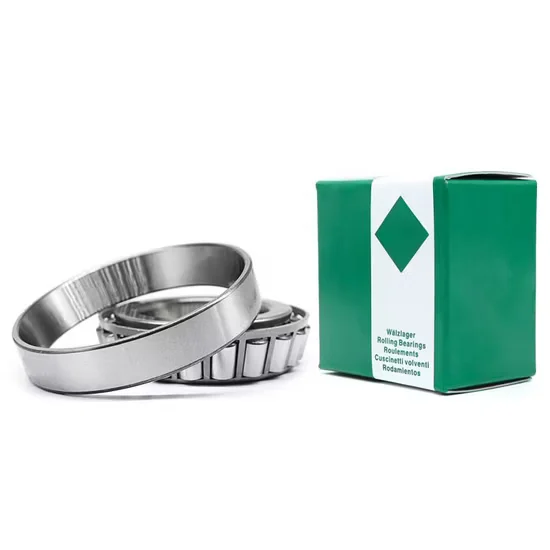 Motorcycle and Bicycle Bearings Genuine TIMKEN 30205 32006X Taper Roller Bearing for Motorcycle Parts HK2016 Axk2035 View Details
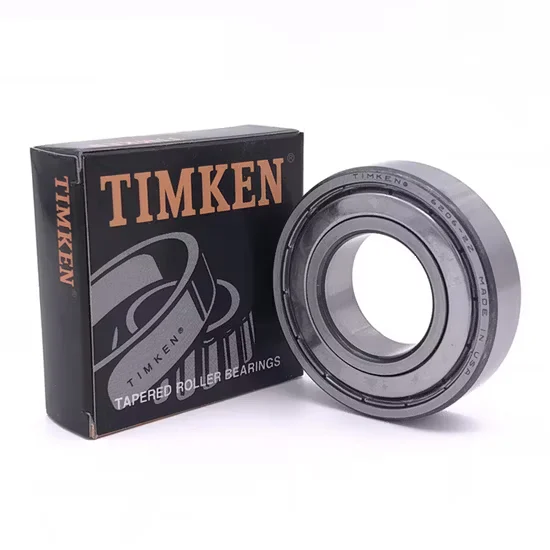 Deep Groove Ball Bearings Timken 6217 Deep Groove Ball Bearing - Wear-Resisting Radial Bearing View Details
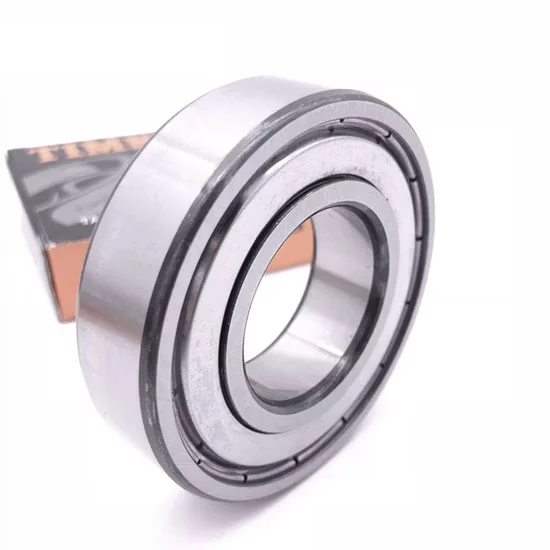 Deep Groove Ball Bearings Genuine Timken 6305 2Z Deep Groove Ball Bearing Wholesale Supplier View Details
Where it runs
Applications
This bearing is linked to the repair and equipment settings below. Open each one to see the related product categories and models.
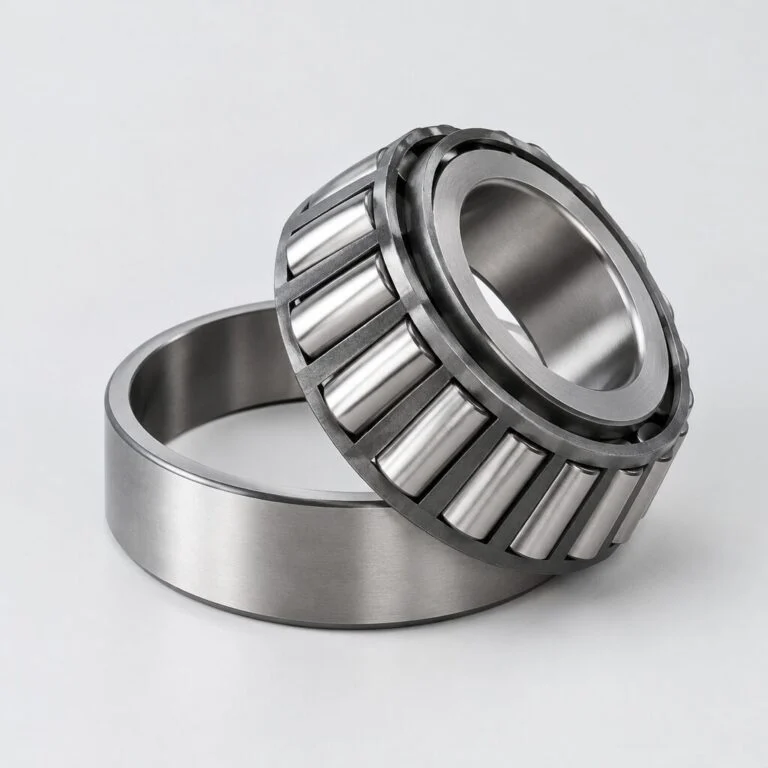 Heavy Equipment Repair Heavy equipment repair covers bearing positions in final drives, axles, swing assemblies and drivetrain components that run under high radial and axial loads. Shock… Bearings by Industry · Roller Bearings · Tapered Roller Bearings · Inch Size Bearings View Application
 Machinery Maintenance & Repair Plant maintenance teams replace bearings in electric motors, pumps, compressors, textile machines and machine tool spindles. Speed, vibration, noise and unplanned downtime are the… Ball Bearings · Deep Groove Ball Bearings · Electric Motor Bearings · Pump and Compressor Bearings View Application
One list for inch and metric Timken bearings
Rebuilding a differential, wheel end, gearbox or transmission? Request single replacements or a complete assembly list, and compare the set price with itemized prices.
Send Your Assembly ListTechnical articles
Selection and Identification Guides
These articles support bearing selection and identification for this product type.
Product & Series Guides Sep 24, 2026 HM212049/HM212011 Bearing for Heavy Truck: Wholesale Supplier Verify HM212049/HM212011 bearing specs to prevent heavy truck axle failures and port seizures. Ensure precise inner and outer ring matching alongside flawless customs documentation… Read the Article  Applications & Industries Sep 23, 2026 Tapered Roller Bearings for Lumber Mill Equipment Wholesale Supplier Selecting the right Tapered Bearings in Lumber Mill Equipment requires C3 or C4 internal clearance to prevent thermal seizure during high-speed operations. Combine this… Read the Article
 Buying Guide Sep 23, 2026 Timken Bearings for Lawn and Garden Equipment Wholesale Supplier Prevent costly spindle failures by selecting genuine Timken bearings for lawn and garden equipment that match specific load conditions. Verify authenticity through traceability documentation… Read the Article
Buyer questions
Frequently Asked Questions
Transmission Repairs Company supplies Timken bearings to repair shops, distributors and equipment operators worldwide. These answers cover the points buyers check most often.
Do I need to provide both cone and cup numbers?
Yes, provide both numbers wherever the bearing has a separate cone and cup. Listing each component keeps the cup from being missed on the order. If a number is incomplete, send a clear photo of the markings and state what needs confirming.
Can a substitute be supplied without my approval?
No, any technical change requires buyer approval. A substitute is considered only if it is separately identified. The exact specification and complete assembly are confirmed before you accept the quote.
Which product documents can I request?
Name the product documents you need when you request a quote. The documents for your bearing are confirmed at that stage, alongside the part numbers, quantities and estimated lead time.
How are shipping documents handled?
Shipping documents are confirmed for each order, together with the transport method and dispatch arrangements. Include your destination country and postal code in the request. This also lets you compare total landed cost on bulk orders.
Written quote
Request a Quote for This Bearing
Send your cone and cup numbers or full assembly number, and get a written quote with price, availability, estimated lead time and quote validity.
-
WhatsApp
Chat About This Bearing -
Email
info@usatimken.com